Coming up to 54,000 views and.... no one wants to buy well researched books on the subject??
Damn, e are a lost cause!

Coming up to 54,000 views and.... no one wants to buy well researched books on the subject??
Damn, e are a lost cause!
Although there are some classic cases in these books the majority involve cases that are very rare, have never appeared in English before and unlike most "clump everything together to fill a book" efforts these look at aspects of cases as well as some very common but not reported on before entity and scenario types.
Someone who has been involved in Ufology since the 1980s noted: "Over half these cases I have never heard of before!"


B&W
350 pp
Fully illustrated containing photographs and maps
£20.00
Beyond UFO Contact i the fourth book in the groundbreaking series looking at reports of Close Encounters of the Third Kind and Alien-Entity reports from around the world and reassessing these. In addition there is a look at the Search for Extra Terrestrial Intelligences (SETI) and its relevance to the UFO phenomenon.
contents list:
Introduction: The Path of Counter-Actuality
1. Dionisio Llanca: Truck Driver, UFO Abductee and Human Guinea Pig
2. Aliens -What Can We Expect?
3. The Moreland Incident
4. It Is All Fake: Ufology Needs To Be Reassessed
5. Warminster UFOs and Entity Reports
6. Have Things Changed Since 1977?
7. The Beausoleil Cas -Even Aliens Like Theatre
8. The Pwca
9. Contact...with the Vegetable Alien
10. The Casitas Dam UFO Photograph and Entity
11. The Crystal Lake Encounter
12. The Humanoids at South Riverand the Luczkowich Encounter
13. Harrison Bailey
14. Sonny DesVerger
15. The UFO "Borderline"-The Imjarvi Skiers
16. Some Interesting Reports to Note
17. Dead Aliens in Photographs
18. Ufology, Government Cover Ups and Disclosure
19. The Reports That You Might Not Want To Look Into
20. Conil de la Frontera -a Credible Report?
21. Eighteenth Century Aliens?
22. Clearview Ranch
23. The Pat McGuire Case
24. Piero Fortunato Franzetta
25. The Silbury Hill Encounter
26. The Bridge Abduction
27. The Bagshot Heath UFO Incident
28. Lurkers and Alien Disinterest
29. What If YOU See Aliens Land?
30. So What Would YOU Do If You Encountered A Landed UFO?
____________________________________________________________
.jpg)
.JPG)
I have since come across at least two possible "abduction" cases from the same small town and slightly further afield there are two likely "abduction" incidents but each of the women involved thought no more of the incidents (despite a joke by one's husband) and have gotten on with their lives.
I would never consider opening up a whole life of trauma for them just to get details. I have not broached the subject of hypnosis with one likely percipient as he, too, has gotten on with his life despite still knowing there was a chunk of missing time.
Something was obviously going on in a small (quite small) area of Devon in 1978-1979 and despite what you might read these two years were peak CE3K/AE activity years. All of those involved at the time were teenagers with no knowledge of UFOs -the world was a lot different before the internet. To give details that only someone who has studied cases would really know in one cause would be interesting. In two cases that is coincidence but more than three cases -and in the other two where those involved only joked about being abducted as they had no recall of such an experience it goes beyond coincidence.
Ufologists and Ufology failed the possible percipients and we lost their full accounts. The main adult witness to the UFOs themselves would have been interesting to talk to but he was far from young 47 years ago.
I suspect that like many more that Ufologists would not investigate through prejudices we will never know the true story of what happened that night.
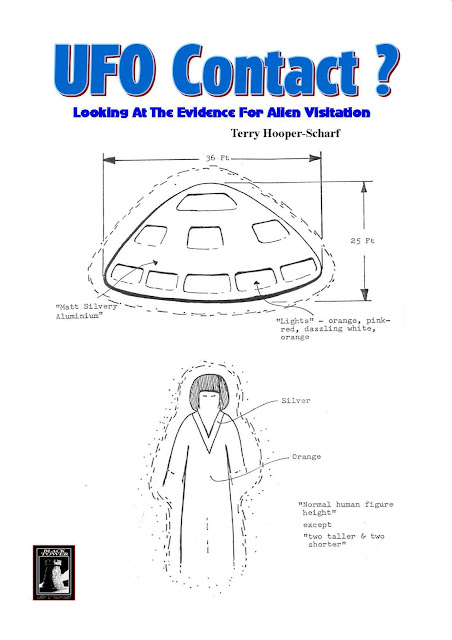
UFO Contact? has the full case
https://aeceiiikp.blogspot.com/2025/01/five-books-that-might-jkust-answer.html
updates
https://aeceiiikp.blogspot.com/2019/11/buckfastleigh-devon-reports.html
and
https://aeceiiikp.blogspot.com/2019/12/more-devon-abductions.html
1978 school sighting
https://terryhooper.blogspot.com/2019/06/1978-paighton-school-ufo-sighting.html
A machine-learning algorithm trained on synthetic planetary systems has been let loose — and in the process has identified nearly four dozen real stars that have a high probability of hosting a rocky planet in their habitable zone.
"The model identified 44 systems that are highly likely to harbor undetected Earth-like planets," said Jeanne Davoult, an astronomer at the German Aerospace Agency DLR, in a statement. "A further study confirmed the theoretical possibility for these systems to host an Earth-like planet."
Often, "Earth-like" worlds — Earth-like in the sense that they have a similar mass to our planet and reside in their star's habitable zone — are found by chance, often in huge surveys that watch thousands of stars for transiting planets. However, astronomers would like to even the odds of finding Earth-size habitable-zone planets, and hence require a more targeted means of finding candidate stars.
This is what led Davoult to develop the algorithm while she was at the University of Bern in Switzerland. Like all models based on machine-learning algorithms that learn to identify patterns and make predictions based on where the algorithm sees those patterns, it had to be trained on data. The problem, however, is that although nearly 6,000 exoplanets have been discovered so far, the information that we have on these worlds is patchy. And in general, even 6,000 worlds is not enough to train the algorithm.
So, Davoult and her colleagues at the University of Bern, Romain Eltschinger and Yann Alibert, turned to another model that is able to simulate worlds based on everything we know about planetary systems. The Bern Model of Planet Formation and Evolution has been in continuous development at the University of Bern since 2003, and is constantly undergoing improvements as more data and theoretical models become available.
"The Bern Model can be used to make statements about how planets were formed, how they evolved and which types of planets develop under certain conditions in a protoplanetary disk," Alibert said in the statement. "The Bern Model is one of the only models worldwide that offers such a wealth of interrelated physical processes and enables a study like the current one to be carried out."
The Bern Model spat out 53,882 simulated planetary systems around three different types of stars: G-type stars like our sun, red dwarfs with about half the mass of the sun, and a second group of red dwarfs with just a fifth of a solar mass.
The algorithm set about searching these simulated planetary systems for patterns or correlations, connecting the presence or absence of an Earth-size habitable-zone planet with various architectures of the planetary systems.
Some correlations are more evident than others. For example, there's a correlation between the existence of an inner rocky planet co-inhabiting a system with an outer gas giant. This is the same architecture that our solar system has, with the rocky planets closer to the sun than the gas giants.
On the flip-side, there's an anti-correlation between hot Jupiters, which are gas giants close to their sun, and "peas-in-a-pod" planets, which are strings of rocky planets of similar mass and orbital spacing that have been found around some red dwarf stars such as TRAPPIST-1 and Barnard's Star. Because a hot Jupiter is a gas giant that formed farther out from its star and then migrated inwards, knocking any planets in its path out of the way, we would not expect to find a hot Jupiter alongside such orderly rocky planets.
But there are deeper correlations too, which were identified by Davoult in earlier research. In particular, the mass, radius and orbital period of the innermost detectable planet seems to be a big signpost as to whether a system hosts an Earth-size, temperate planet or not.
For instance, Davoult found that around G-type stars like our sun, the existence of an Earth-sized habitable zone planet seems more probable if the radius of the innermost detectable planet is greater than 2.5 times the radius of Earth, or if it has an orbital period greater than 10 days.
Armed with the knowledge of these correlations, the algorithm was successfully trained on the simulated data.
"The results are impressive: the algorithm achieves precision values of up to 0.99, which means that 99% of the systems identified by the machine-learning model have at least one Earth-like planet," said Davoult.
Confident in the algorithm's ability to recognize correlations, it was then applied to real observations, providing the 44 candidate planetary systems in which there is a high probability that an Earth-size planet exists in the habitable zone of its star. Astronomers can now follow up on these targets, rather than searching stars blindly.
The algorithm will really prove its worth in the future. The European Space Agency's PLATO mission is expected to discover many thousands of transiting planets. By applying the algorithm to PLATO's discoveries, it should be able to narrow down the many thousands of systems to the few that have a higher chance of supporting an Earth-like planet, allowing astronomers to find them more quickly and efficiently.
"This is a significant step in the search for planets with conditions favorable to life and, ultimately, for the search for life in the Universe," said Alibert.
The findings are published in the April 2025 issue of the journal Astronomy & Astrophysics.

Patrick Grosse's URECAT is a formal catalog of UFO related entities sightings reports with the goal of providing quality information for accurate studies of the topic. It is a very useful site at times but I have been asked (I have no idea why I am asked as I have nothing to do with it!) why so many really "solid" encounters are excluded?
It has been suggested that Grosse is a debunker and only picks cases that can be dismissed. I should point out that if you have ever concluded that then you have certainly not read through his URECAT!
If you go to the bottom of each page you will note "This page was last updated on October 8, 2018" so seven years ago. Why hasn't it been updated? No idea. Perhaps Grosse lost interest in the subject as that does happen and only someone "odd" might spend 50 years looking at the entity/CE3K aspect of the subject as certainly there are few people who have even bothered reading the reports or spent 20 years studying them.
URECAT is an interesting source well worth considering a read through and we can only hope Grosse updates it one day.
update.
I just found this on the URECAT home page:
I started this website in March 2000. It has more than 23 000 html files now, but this is still only a small proportion of the amount of documentation, case studies and information I published compared to the mass of information I intend to publish. Thank you for your visit and support!
I have counted five (5) different versions of this account. Eerie's Vault adds another. This is from Spooky Valley https://spookyvall...


